
Rust prevention coatings are the only reason we bother blasting steel in the first place. Stripping a gooseneck trailer down to clean metal out on a Lake City farm road feels like the finish line. It is not. Bare steel in Columbia County starts flash rusting before you have the hose coiled, and if the wrong product goes on the surface, or the right product goes on too late, you paid good money for a beautiful profile that will bubble by next summer. Here is the honest part most people skip.
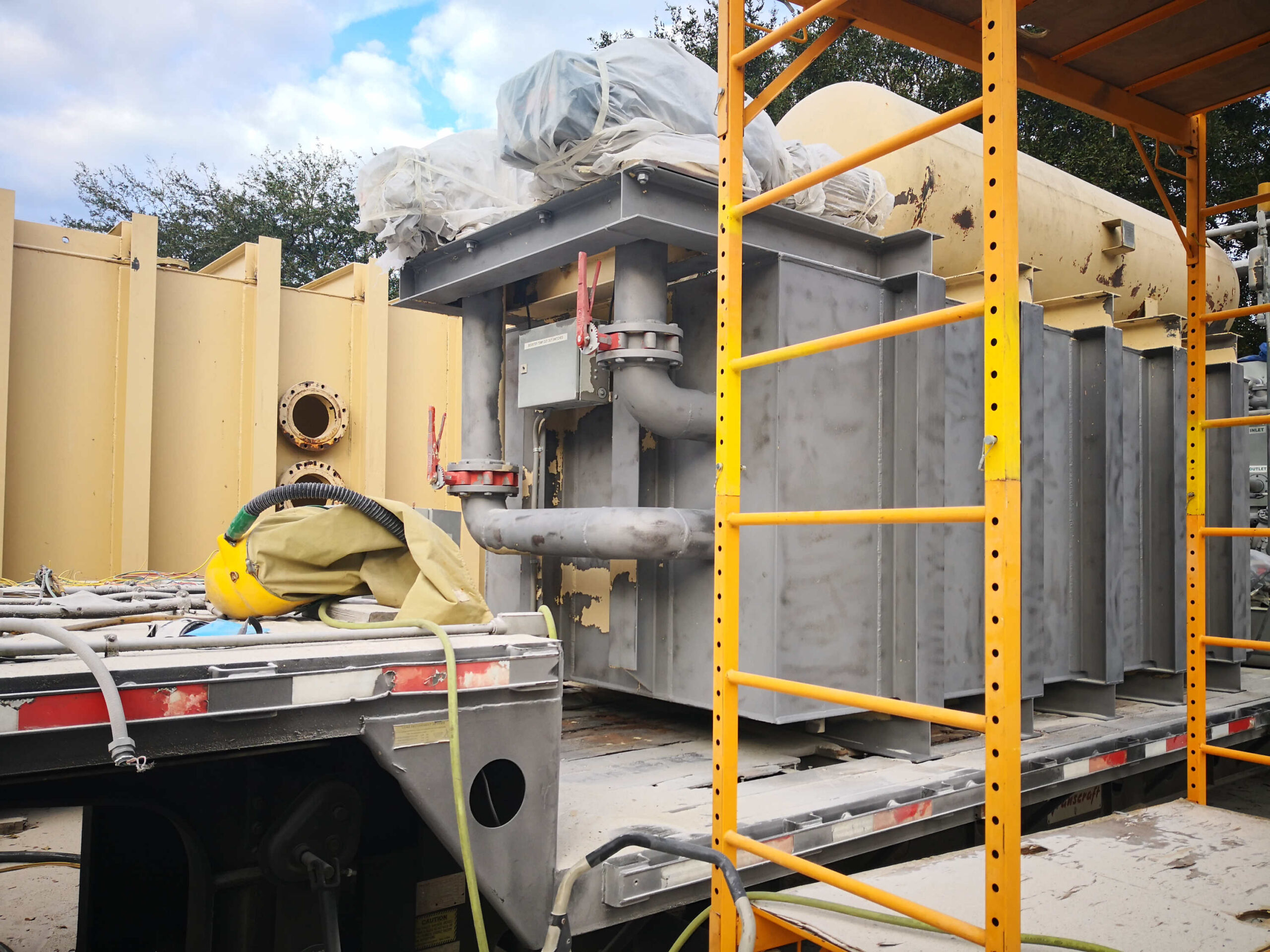
Why Columbia County chews up coatings faster than the label says
Every coating can on the shelf was tested somewhere with a laboratory climate. We work along the I-75 corridor, between the Suwannee and the Santa Fe, where the dew does not burn off some mornings until nine or ten. Summer afternoons hit ninety percent relative humidity and then a thunderstorm rolls through anyway. Barns out toward Fort White and Branford hold moisture in the shade all day long. That is the real test bench.
Three things kill coatings here, in this order. Moisture that never fully leaves the steel. Soluble salts left behind on old equipment, especially anything that has hauled fertilizer or spent time near the coast. And UV, which cooks the resin out of a topcoat over a few Florida summers until it chalks under your hand.
A coating system that ignores any one of those three will fail early. Not dramatically. It will creep, starting at an edge or a weld, and by the time you notice the bubble the rust underneath it has been working for a year.
Rust prevention coatings: 6 systems that actually hold up here
We are not going to name brands, because the brand matters far less than the chemistry and the prep. These are the six families of rust prevention coatings we see working on North Florida steel, and what each one is genuinely good at.
1. Zinc-rich primer
This is the heavyweight. A zinc-rich primer works by galvanic sacrifice. The zinc corrodes instead of the steel, the same way a zinc anode protects a boat shaft. Scratch it down to metal and the surrounding zinc still protects the scratch. Nothing else in this list does that.
The catch is that zinc-rich primer demands a properly blasted surface. It wants a near-white or commercial blast with real profile underneath it. Brush it over mill scale or a wire-brushed patch and you have wasted an expensive product. This is the system for structural steel, trailer frames, gates, and anything that has to last a decade outdoors.
2. Epoxy mastic, the surface-tolerant option
Epoxy mastic is the workhorse. Thick build, high solids, and more forgiving of a surface that is clean but not perfect. It seals moisture out rather than sacrificing itself, and it grips tight residual rust better than most.
The honest limitation: epoxies chalk in sunlight. Left as a topcoat on a piece of equipment sitting in an open pasture, the color fades and the surface goes powdery within a couple of Florida summers. It still protects. It just stops looking like anything. Use it as a primer or an intermediate coat and put something UV-stable over it.
3. Epoxy primer with a polyurethane topcoat
This is the combination that goes on most of the trailers, implements, and commercial steel we handle. The epoxy handles adhesion and moisture. The polyurethane handles sunlight, gloss retention, and the occasional pressure washing.
Two coats, correctly recoated, and the finish is genuinely tough. It is also the system most people mean when they say they want it to look new. It costs more in labor than a single-coat product because it is two products applied in sequence, and it is worth it on anything you plan to keep.
4. Direct-to-metal acrylic or DTM alkyd
One coat, straight onto prepared steel, no separate primer. Fast, easy to touch up with a brush next season. On a barn gate, a set of cattle panels, a fence frame, or equipment that lives under a roof, a DTM product is perfectly honest protection.
Do not oversell it to yourself. A DTM coating is a thinner film with less barrier than a true two-part system. It is the right answer for items that are easy to recoat and the wrong answer for a structural member you will never get a ladder to again.
5. Moisture-cure urethane
Here is the specialty pick, and it is a Florida pick. Moisture-cure urethane uses humidity in the air as part of its curing reaction. Everything that makes our weather an enemy to other coatings, this one uses as fuel.
That makes it worth having on the truck when we are working outdoors on something we cannot move into a shop. A dock structure, a tank, a rail out in the open where the dew point is going to win the argument. It is not what we reach for every day, but on the right day it is the only thing that will cure properly.
6. Galvanizing, worth knowing about and not something we do
Hot-dip galvanizing, where steel is dipped in a bath of molten zinc, is the longest-lasting rust prevention there is for the right parts. We do not offer it. Nobody blasts and dips in the same shop, because it is a separate industrial process with its own kettle.
We mention it because customers ask, and because the honest answer for a small run of new fabricated brackets that need forty years of life might be a galvanizer and not us. Cold-galvanizing compound in a can is a different, much lighter-duty product. It is useful for touching up weld burns on already-galvanized steel, not a substitute for a real coating system.
The recoat window matters more than the product you picked
This is the part that separates a coating that lasts from one that peels, and it has nothing to do with what is in the can.
Freshly blasted steel is chemically hungry. In a Columbia County summer, visible flash rust can appear within two to four hours of the blast, and on a humid morning it can happen inside an hour. That light orange film is not cosmetic. It is a loose layer between your good steel and your good coating, and anything applied over it is sticking to rust rather than to metal.
So the rule on our jobs is simple. Blast and prime the same day, usually within a few hours. If the weather turns and we cannot get primer on, we would rather stop, tarp it, and sweep the surface again in the morning than coat over flash rust and hand you a problem with a warranty on it.
The second timing issue is between coats. Every two-part product has a recoat window, a minimum before the next coat goes on and a maximum after which the previous coat has cured too hard to bond chemically. Blow past the maximum and the surface has to be abraded before recoating. Rush the minimum and you trap solvent, which shows up later as blisters.
Profile: the thing nobody sees that every coating depends on
Coatings do not stick to smooth steel. They grip the microscopic peaks and valleys that blasting creates, and that texture has a measurement. The anchor profile, usually somewhere between 1.5 and 3 mils depending on what is going over it.
Too shallow and the coating has nothing to hold. Too aggressive and the peaks poke through a thin film, leaving pinpoints of unprotected steel that rust first. Matching media to the specified profile is a real decision on every job, and it is why we ask what coating is going on before we pick abrasive. The standards behind all of this come from SSPC, and the safety side of abrasive blasting is covered by OSHA. We work to both.
Our metal sandblasting service in Lake City is built around that matching, and when a site needs less dust we use dustless blasting around Columbia County instead. Wet methods bring their own flash rust clock, though, which is a separate conversation.
When a coating is the wrong answer
We will tell you straight when this is not worth doing. If the steel has section loss, if a trailer crossmember has rusted thin enough to flex or a gate post crumbles when you tap it, no coating on earth fixes that. Steel gets replaced first. Paint over a failing member is just a nicer-looking failure.
And if the item is small, indoors, and easy to reach, a wire brush and a can of DTM on a Saturday afternoon is a legitimate answer. We would rather say that than take a job you did not need.
What we actually do on a Lake City job
We ask what the item is, where it lives, and how long you want it to last. We match abrasive to the coating spec. We blast to the profile that spec needs. Then the same crew coats it, usually the same day, because we do the blasting and the painting and coating work in Lake City ourselves. No handoff, no waiting on a second contractor while your bare steel sits in the dew.
That is the whole system. Right prep, right product, right timing, one crew. Rust prevention coatings do not fail because somebody bought the cheap can. They fail because the surface was not ready or the clock ran out.
Need sandblasting in Lake City or nearby? Call (386) 400-1904 for a free on-site estimate. You will reach someone who actually does the work.